
Benefits of Proper Grading for Septic Systems in North Georgia
When it comes to Benefits of Proper Grading for Septic Systems, proper grading in North Georgia directs water away from septic drain fields, preventing pooling in the region’s clay-heavy soil. Stewart Brothers Grading, a licensed excavation contractor, shapes sites so wastewater disperses correctly, protecting the system’s lifespan. Correct slope and soil preparation reduce backups, extend drain field function, and keep new installations code-compliant from day one.
Key Takeaways
- Proper grading directs water away from septic systems, preventing costly damage and system failure in North Georgia.
- Professional grading in Pickens County eliminates erosion risks that compromise septic installation and structural integrity.
- Correct land preparation reduces permit delays and rework expenses by ensuring compliant septic system designs.
- Level foundations from grading support septic longevity, drainage efficiency, and residential or commercial construction success.
What does proper site grading actually involve?
Site grading starts long before a bulldozer ever moves dirt. A qualified contractor first walks the property, checking soil type, existing slope, and drainage patterns unique to the lot. In North Georgia, that means accounting for red clay subsoil and the natural grade shifts common to hillside and rural parcels alike.
Stewart Brothers Grading approaches each project as a sequence, not a single task. Skipping a step, or rushing the process, creates problems that surface months or years later—often after the septic system is buried and harder to fix.
The typical process includes:
- Site evaluation — assessing soil composition, slope direction, and existing water flow before any equipment arrives.
- Land clearing — removing trees, brush, and debris that block equipment access or interfere with drain field placement.
- Rough grading — reshaping the land to establish the base slope needed for the septic system and structures.
- Topsoil redistribution — moving and leveling soil to correct low spots and prevent future pooling.
- Final grading — fine-tuning the slope so runoff moves away from the drain field and foundation, not toward it.
Each step builds on the last. Rough grading without a proper site evaluation risks moving soil in the wrong direction entirely. Final grading corrects small errors, but it can’t fix a drainage plan that was wrong from the start. That’s why sequencing—not just equipment—separates a durable septic installation from one destined for repeat repairs.
How does clay soil affect drainage and grading needs?
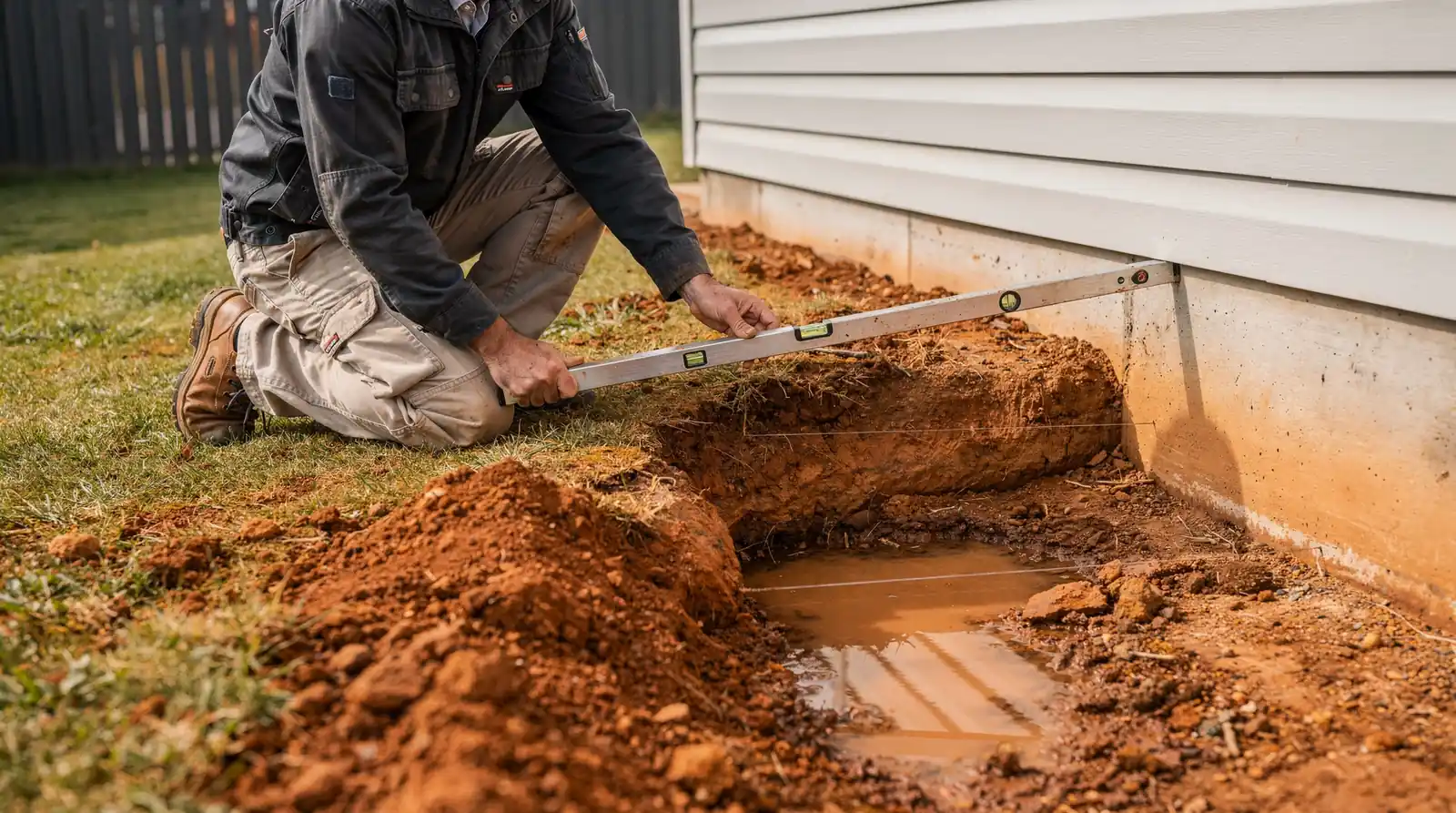
Clay soil traps water instead of letting it pass through, creating a serious drainage challenge for septic systems across North Georgia. Dense clay compacts easily. Without a deliberate slope, standing water collects near tanks and drain fields rather than moving away from the home. Grading shapes that soil so the absorption field can drain and filter effluent the way it was designed to.
North Georgia’s rolling terrain often sits on heavy clay subsoil, and that changes what a lot needs before installation begins. Without proper slope, this clay-heavy ground holds water instead of releasing it, which raises the risk of a saturated drain field. That saturation shortens the lifespan of the system and increases the odds of costly backups.
The benefits of proper grading for septic systems show up most clearly on properties like these. Soil type dictates the entire installation plan.
Why does clay soil cause septic backups?
Clay holds moisture far longer than sandy or loamy soil, slowing how fast a drain field can absorb wastewater. Once the field can’t keep up, effluent has nowhere to go except back toward the tank or up into the yard.
Can grading fix a drainage problem on an existing lot?
Regrading helps redirect surface water away from a struggling system. Lasting results, though, come from handling soil excavation and final grading correctly at the start, with coordination alongside local health departments to keep every phase compliant with Georgia’s regulations.
What happens when a septic field is graded incorrectly?
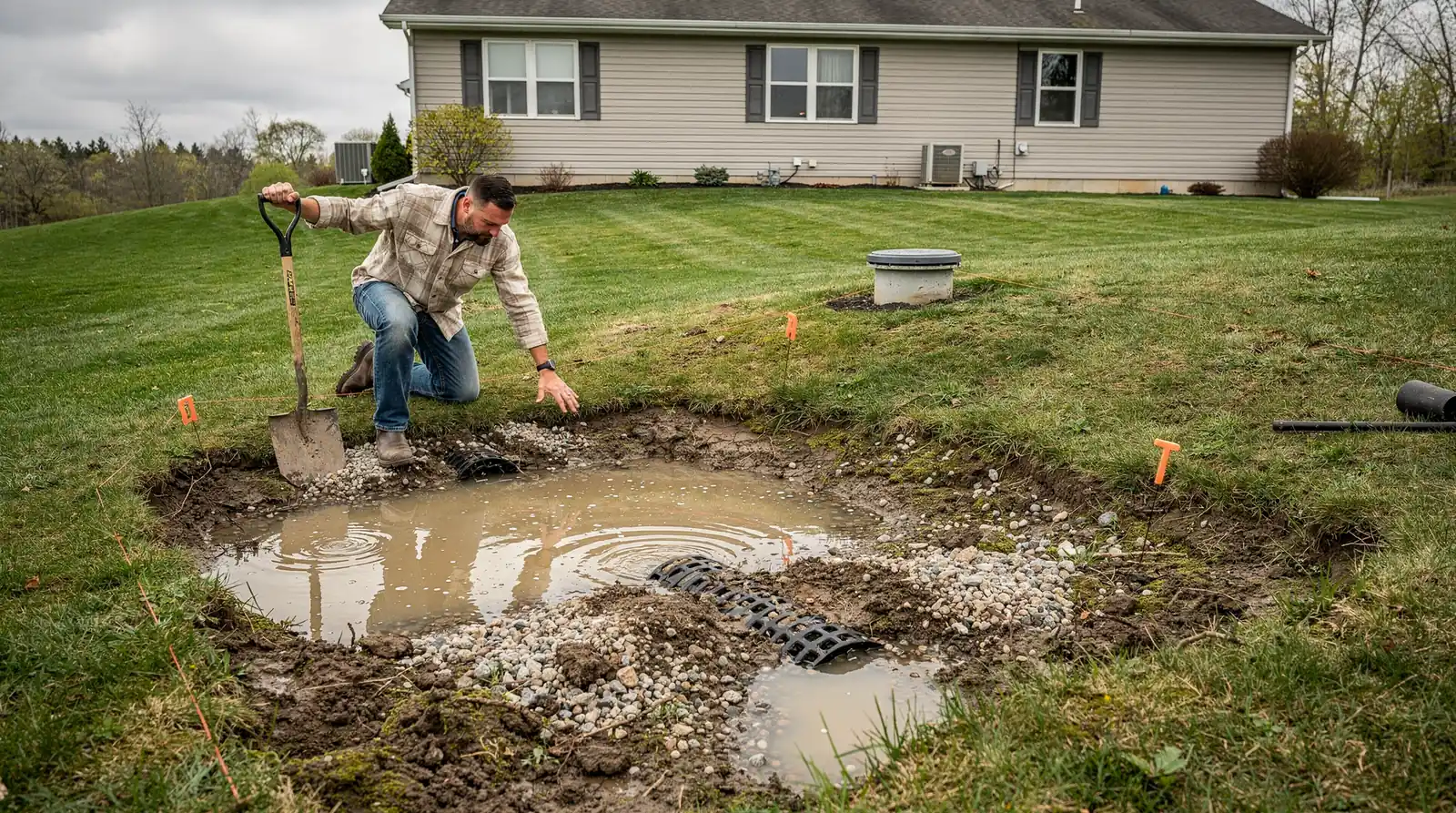
Incorrect grading traps water above the drain field, drowning the soil that should be absorbing wastewater. Standing water saturates the trenches, sewage backs up toward the house, and the entire system stops treating waste properly. In North Georgia’s dense clay soils, this problem shows up fast, especially on lots with high water tables where drainage margins are already thin.
Shortcuts during installation cause most of these failures. Attention to detail during grading and installation work prevents the kind of corner-cutting that leads to field failures years down the road. cite-2 Skipped slope calculations, uneven fill, or rushed compaction all set up a field to fail long before its expected lifespan.
The stakes go beyond a bad smell in the yard. Neglecting proper grading and installation puts a property’s septic function and resale value at risk. Buyers and inspectors in North Georgia routinely flag drainage problems during due diligence. cite-2
Why do North Georgia sites face extra scrutiny?
Properties with high water tables or heavy clay face intense review from local health departments before a wastewater system earns approval. These challenging lots often require an at-grade system, which depends almost entirely on correct surface shaping rather than deep trenching, and that system still undergoes close inspection.
Common signs of a poorly graded field:
- Pooling water near the drain field after rainfall
- Slow drains or gurgling toilets inside the home
- Sewage odor near the yard’s lowest point
- Soggy or unusually green patches over the field
Correcting these issues later costs far more than grading the lot right the first time.
How does grading support new septic installations and permits?
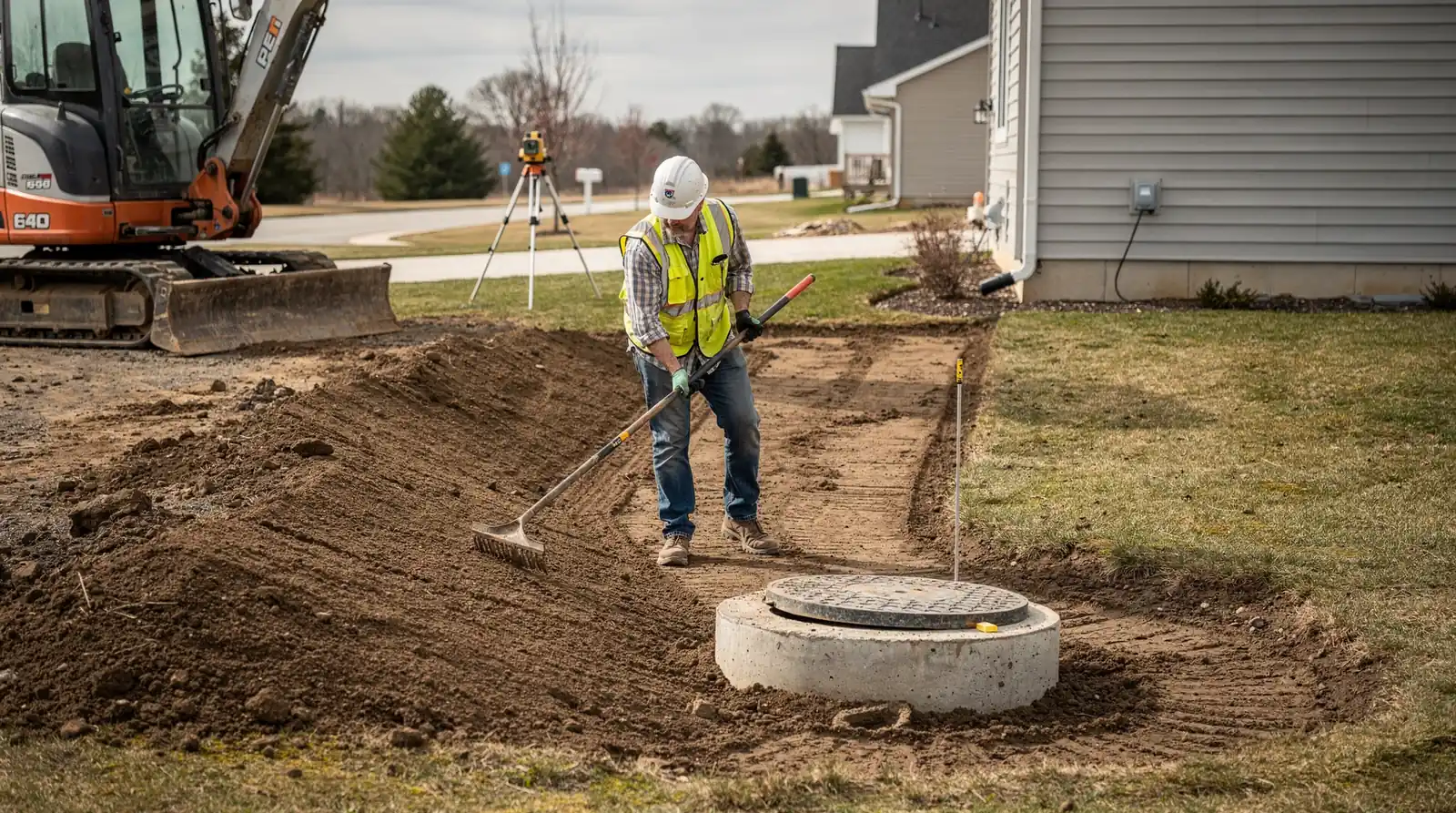
Grading shapes the land to support proper septic system installation and overall site preparation for compliance with inspection requirements. Skipping this step in North Georgia’s clay-heavy, sloped terrain risks failed perc tests, rejected permits, and costly redesigns down the road. Correct grading gives inspectors confidence that water will move away from the drain field instead of pooling around it.
A licensed excavation contractor serving North Georgia properties handles land grading. Leveling as one part of a broader site package, alongside septic tank installation and field line digging. Stewartbrothersgrading.Com These services work together, not in isolation. A property owner near the North Georgia mountains, for example, needs a contractor who can level a sloped lot and lay drain lines in the same visit.
A full septic project follows a set sequence:
- Site preparation and clearing
- Soil excavation
- Tank placement
- Drain field installation
- Final grading
Each stage depends on the one before it, and skipping ahead invites problems that surface months later.
Who handles septic permitting on a graded site?
Licensed professionals who specialize in septic tank installation typically manage the permitting conversation directly. This matters most on North Georgia lots where permits demand precise soil and slope documentation before approval.
Why does grading affect permit approval timelines?
Grading crews that coordinate directly with local health departments. Building officials keep projects aligned with Georgia’s environmental and safety codes. This close coordination reduces back-and-forth delays. One key benefit of proper grading for septic systems is that inspectors see a site already shaped to meet drainage and setback requirements, which speeds approval rather than stalling it.
What should homeowners do to protect their investment?
Protecting a septic investment starts with treating grading as a functional requirement, not a cosmetic step. North Georgia properties depend on a stable, level foundation before any septic system or construction project can move forward. Skip that step, and the entire system faces problems ranging from pooling water to premature drain field failure.
Homeowners across North Georgia’s rolling terrain should evaluate land shape before installation begins, not after. A septic system’s function and long-term value hinge on how well the land around it directs water. Grading done correctly keeps water moving away from tanks and drain fields instead of collecting near them.
How does grading affect long-term septic performance?
Land that drains properly resists erosion and keeps water flowing away from structures and septic infrastructure. Over time, poor drainage erodes soil around the drain field and shortens the system’s usable life. Correct slope and soil shaping reduce that risk significantly.
Why does contractor choice matter for grading quality?
Not every excavation crew treats grading with the same care. Homeowners get more dependable, lasting results when they choose a contractor focused on quality workmanship and attention to detail. cite-2 That difference shows up years later, when a well-graded lot still drains correctly and a poorly graded one doesn’t.
Before hiring, homeowners should confirm a few basics:
- The contractor holds proper licensing for excavation work in Georgia
- The crew has experience with North Georgia’s clay-heavy, sloped terrain
- Grading plans account for both septic function and erosion control
A property’s value rises or falls with how well its septic system performs. That performance starts underground, in the shape of the land itself.
Proper grading forms the foundation of a healthy septic system, protecting your investment and your property’s long-term functionality. By ensuring correct drainage patterns, preventing water pooling, and maintaining appropriate slopes around your system, you safeguard both soil integrity and groundwater quality. In North Georgia’s variable terrain, professional grading expertise makes the difference between a system that performs reliably for decades and one prone to costly failures. Stewart Brothers Grading brings licensed, experienced operators to every project, delivering the dependable site preparation your septic system demands.
FAQ
Why does proper grading matter for septic systems in North Georgia?
Grading directs water away from drain fields, preventing pooling in the region’s clay-heavy soil. Stewart Brothers Grading shapes sites so wastewater disperses correctly, protecting the system’s lifespan and keeping installations code-compliant.
What steps are involved in proper site grading?
The process includes site evaluation, land clearing, rough grading, topsoil redistribution, and final grading. Each step builds on the last, ensuring runoff moves away from the drain field and foundation instead of toward it.
Why is clay soil a concern for septic drainage in North Georgia?
Clay soil traps water instead of letting it pass through, raising the risk of a saturated drain field. Without proper slope, standing water collects near tanks and fields, shortening system lifespan and increasing backup risks.
Conclusion
Proper grading is not a finishing touch on a septic installation—it’s the foundation the entire system depends on. In North Georgia’s clay-heavy, sloped terrain, the difference between a septic system that performs reliably for decades and one that fails within a few years often comes down to how well the land was shaped before the first pipe went in. Correct slope, careful soil preparation, and attention to drainage patterns keep water moving away from tanks and drain fields instead of pooling around them, protecting both the system’s function and the property’s value.
Homeowners, buyers, and builders across Pickens County and the surrounding region benefit most when grading, excavation, and septic installation are handled as one coordinated process rather than separate tasks. Stewart Brothers Grading brings that licensed, experienced approach to every site, ensuring the land is prepared to support a septic system that works the way it was designed to—from day one and for years to come.