

A pond that once looked clear and healthy can turn into a shallow, weedy, smelly mess within a few years. If yours is filling with muck, growing algae, eroding at the edges, or losing water, restoration can fix it. This guide explains what lake and pond restoration is, how to tell when you need it, what the process looks like, and what affects the cost.
We’ve handled earthmoving, grading, and excavation projects in North Georgia for 10+ years. We wrote this from what we see on job sites, not from a brochure.
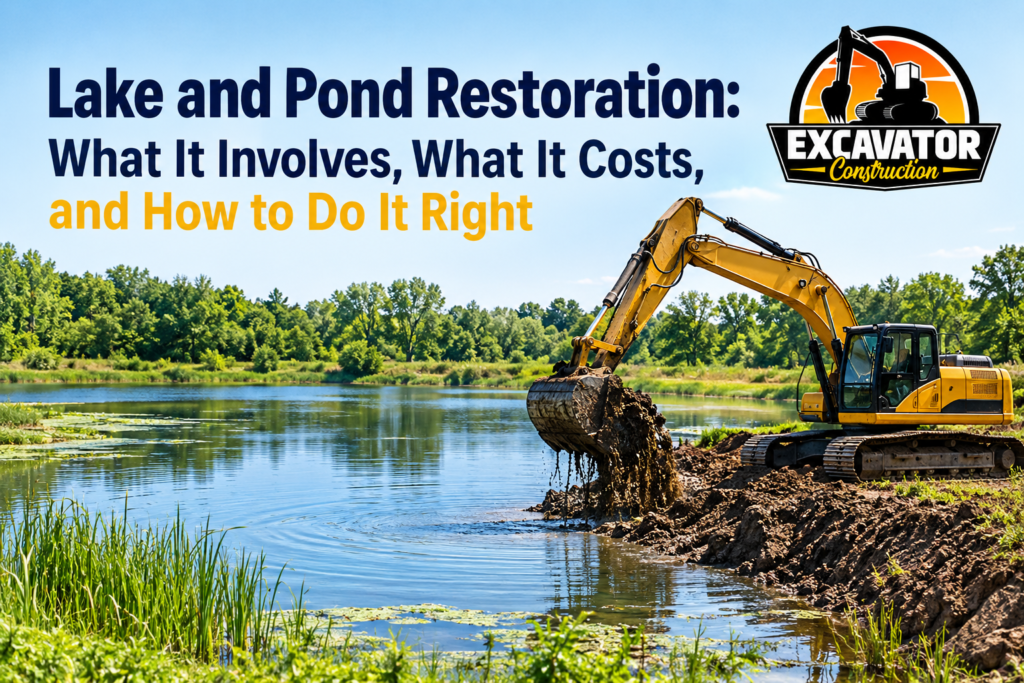
What Is Lake and Pond Restoration?
Lake and pond restoration means bringing a water body back to a healthy, usable condition. Depending on the problem, that can include:
- Dredging and sediment removalto restore depth and storage capacity
- Shoreline grading and stabilizationto stop erosion and slumping
- Dam, spillway, and outlet repairto fix leaks and overflow problems
- Drainage and inflow correctionso stormwater and runoff stop delivering new silt
- Vegetation managementto control invasive weeds and overgrowth
- Re-shaping the basinfor better circulation, fish habitat, or recreation
Restoration isn’t one product or treatment. It starts with finding out why the pond is failing, and then fixing that cause.
7 Signs Your Pond or Lake Needs Restoration
- It’s getting shallower.Sediment (silt, leaves, organic muck) builds up over years. Visible mud flats and cattails growing farther out from the bank are common signs.
- Recurring algae blooms.Nutrient-rich sediment feeds algae. Treating the surface without removing the source usually brings it back.
- Foul odor.Rotting organic matter on the bottom creates low-oxygen conditions.
- Eroding or collapsing banks.Undercut edges, exposed roots, and slumping soil mean the shoreline needs regrading.
- Losing water.Leaks through the dam, a failing liner, or a damaged outlet are structural problems, not surface ones.
- Fish kills or declining fish health.Low oxygen and poor depth often show up here first.
- It no longer serves its purpose.Swimming, fishing, irrigation, livestock, stormwater storage, or appearance all suffer when a pond fills in.
How Lake and Pond Restoration Works, Step by Step
- Site evaluation and goals.We walk the property, look at the watershed, inflows, outlets, and shoreline, and ask how you want to use the water. A fishing pond, an irrigation source, and a decorative lake all call for different plans.
- Depth and sediment assessment.Measuring sediment depth tells us how much material has to come out and what equipment the job needs.
- Permits and compliance.Work in or near water, wetlands, or streams may need local, state, or federal approval.
- Drawdown or water management.Depending on the method, the water level may be lowered or the pond drained so crews can reach the bottom safely.
- Sediment removal and re-grading.Using [excavators / long-reach equipment / dredge], we remove accumulated muck and shape the basin to the target depth and slope.
- Shoreline stabilization.We regrade banks to stable slopes and add [riprap, native plantings, erosion control matting] to hold them in place.
- Dam and outlet repair.We rebuild low spots, repair spillways and drains, and correct seepage problems.
- Sediment disposal and site cleanup.Removed material is [spread on site / hauled off / used for grading], and disturbed areas are seeded and stabilized.
- Long-term maintenance plan.We tell you what to do after the work is done, including buffer strips, runoff control, and periodic inspection, so you don’t need a full restoration again in five years.
How Much Does Lake and Pond Restoration Cost?
Costs vary widely, so beware of anyone who quotes a firm number without seeing the site. The main factors are:
- Size and depthof the pond
- Volume of sedimentto remove
- Site accessfor heavy equipment
- Disposal method and distancefor removed material
- Dam, spillway, or liner repairsneeded
- Permitting and environmental requirements
- Shoreline stabilization scope
We provide a written estimate after an on-site evaluation.
Why Grading and Excavation Experience Matters
Restoration is fundamentally an earthmoving job. Slope angles, compaction, drainage, and water flow decide whether a repaired pond lasts or fails. A contractor with grading experience understands how water moves across a property, and that’s what keeps a restored pond from silting up again.
Frequently Asked Questions
How long does pond restoration take?
Small ponds may take days to a couple of weeks. Larger lakes or projects with permits and dam repair take longer. Weather and water levels also affect the schedule.
Can you restore a pond without draining it?
Sometimes. Long-reach excavation or dredging can work in partial water, but draining or lowering the water level often gives better results and lets crews see what they’re doing.
How often does a pond need dredging?
It depends on the watershed, runoff, tree cover, and pond age. Many ponds need attention every [10–20] years, faster if runoff carries a lot of soil.
Will restoration stop algae for good?
Removing nutrient-rich sediment and fixing runoff sources greatly reduces algae, but ongoing nutrient inputs (fertilizer, livestock, leaf litter) can bring problems back if not managed.
Do I need a permit?
Often, yes, especially near wetlands or streams. Requirements vary by location, so check with your local agencies. We can guide you through what to ask.
Can you fix a pond that leaks?
Yes, if the cause is a damaged dam, outlet, or a failing clay seal or liner. The first step is finding where the water is escaping.
Ready to Restore Your Pond or Lake?
Call Stewart Brothers Grading at (770) 894-1288 or request a free site evaluation to get a straight answer on what your pond needs and what it will take.